


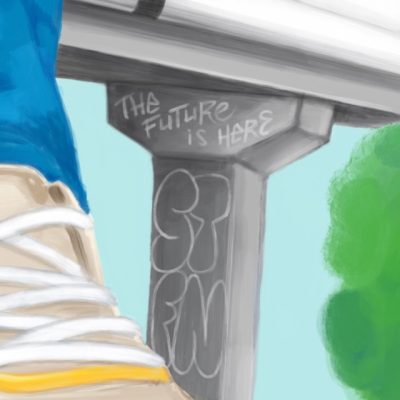
We live in an age where almost anything can be done digitally. Want to take a picture? It takes just a few seconds. Need to tweak an illustration? Long live CTRL-Z (Undo). Want to draw a perfect line? No problem. If you want, artificial intelligence can even come up with dozens of variations for you in no time. Easy, right?
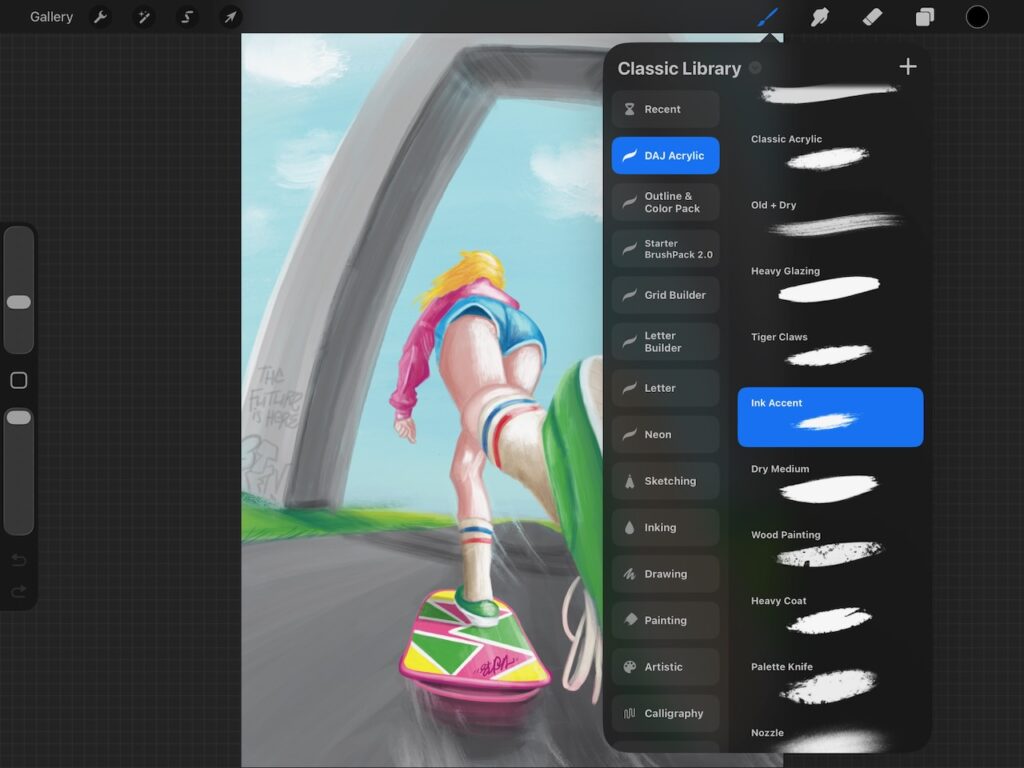
Despite all these options, I’ve actually been reaching for my iPad a bit more often lately. Not to create cleaner lines or to work everything out to perfection. No. Actually, it’s precisely the opposite. I’ve been drawing more with acrylic brushes in Procreate again—brushes that don’t try to create a perfect digital line, but instead add some texture, movement, and rough edges.
The more I work with it, the more I realize I need that. A line that isn’t quite straight. A color that goes just a little over the edge. A brushstroke where you can still see how it was applied. Something that looks like it was made by a person. I’m not alone in this, because there are many others who feel the same way, given the (illustration) trends in the market and the strong desire for handmade imagery.
Why do we want to see something handmade again?
Maybe it’s because we see so many perfect images these days that perfection has actually become less special. That might sound strange in an age when, technically speaking, we can create anything.
Hand-drawn llustrations, analog photography, paper textures, raw typography, and visible brushstrokes, however, are once again everywhere in visual culture, branding, and editorial design. Not because we no longer want to work digitally, but because it feels just a little too distant. Too polished.
We’ve grown accustomed to images in which every detail is just right—where every line is precise and every color is exactly where it should be. Yet it’s precisely when that isn’t the case that it becomes interesting. That imperfection isn’t a flaw; it’s proof of the human touch.
Incidentally, I don’t think any of us want to go back en masse to the days before Photoshop, Illustrator, and iPads. Digital tools are simply too convenient for that. The interesting development, in my opinion, lies elsewhere: we want the best of both worlds. An illustration can be created digitally, as long as you can sense the person behind it.
That may well be the most important nuance in this trend. The renewed interest in handmade work does not automatically mean that every illustrator has to get rid of their computer. It’s much more about bringing back character, a distinctive style, and also tactility (the tangibility and the way a material feels and evokes a sensation when touched).
You can see this trend emerging in various places right now. Visible brushstrokes, rough textures, hand-drawn typography, and other elements are appearing more and more frequently in illustrations, animations, branding, packaging, editorial design, and even digital products. They suggest a physical origin, even though they may have been created digitally. Trend analyses for 2026 also point to a clear interest in tactile textures and hand-drawn elements as a reaction to the increasingly digitized visual culture.
The human touch in the AI
The timing is certainly interesting. Just as generative AI is making it increasingly easy to produce images, the value of human handwriting seems to be growing. This trend isn’t limited to illustrations.
Take animation, for example. Major productions are increasingly using a combination of techniques to create a more illustrative and handcrafted look. Films like Spider-Man: Into the Spider-Verse* have shown that 3D and 2D elements can work together exceptionally well. At the same time, independent animation studios continue to work with distinctly hand-drawn styles.
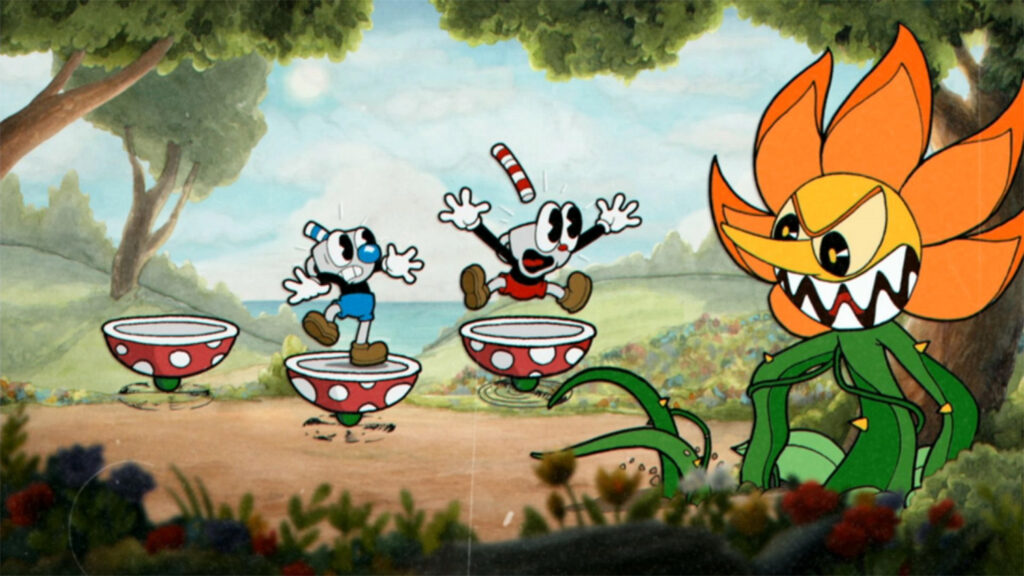
Hand-drawn imagery often plays an important role in video games as well. Take Cuphead, for example: the developers deliberately chose to emulate the look of classic, hand-drawn animation from American cartoons of the 1920s. A hallmark of this style is “rubber hose” animation. Arms and legs are very flexible and lack bones, elbows, or knees.
We also see this desire for human expression reflected in the Australian animated series *Bluey*. Thanks in part to its colorful 2D animation, the series has become a global success and is loved by both children and adults. There will even be a full-length movie coming to theaters in August 2027, *The Bluey Movie*. After the first trailer was released in August 2026, it drew significant criticism online when the beloved hand-drawn 2D style underwent a 3D transformation. To many, this feels too polished and too generic. Whether this will cause fewer people to go to the movies remains to be seen, of course, but it’s telling that criticism is being voiced.
We also see a lot of criticism in advertising when AI is used. Last year, both Coca-Cola and McDonald’s faced significant backlash for using AI in their Christmas campaigns. McDonald’s Dutch Christmas commercial was even taken offline following this criticism. Consumers clearly don’t like so much fakery in ads. The Hermès brand probably thought, “This won’t happen to us,” and hired illustrator Sarah Martinon. Together with animator Armand Béraud, the illustrations were brought to “life.” Sarah even hand-painted a store window display for the brand. The reactions online were euphoric. So that’s another way to do it.
Working digitally, but not losing your touch
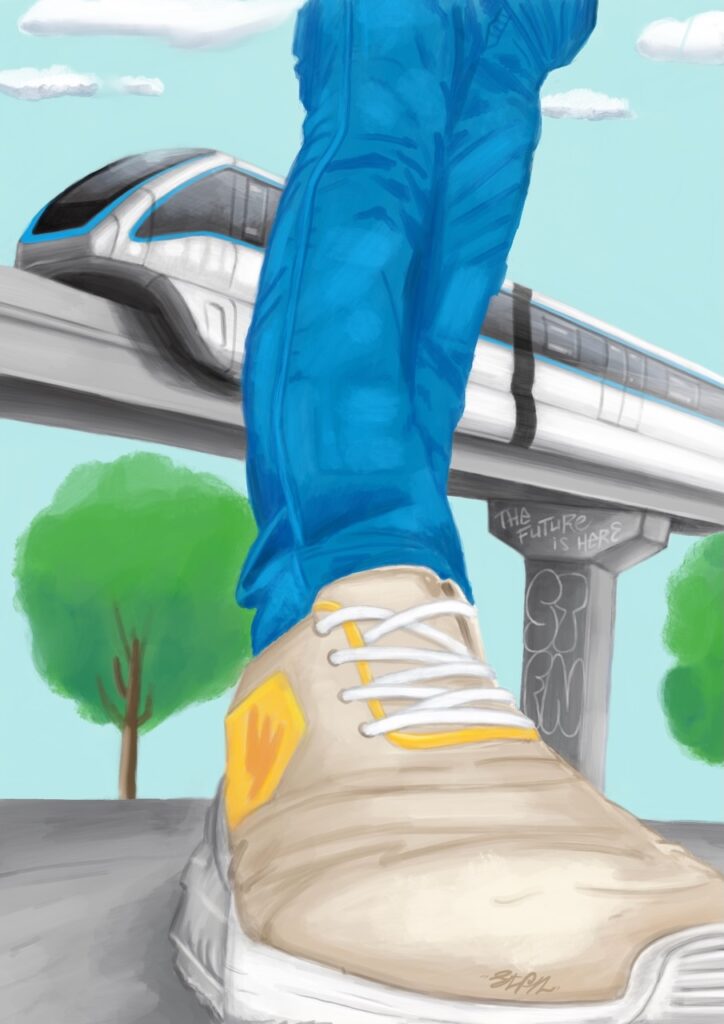
That’s where I see the interesting contrast. As an illustrator, I have absolutely no intention of getting rid of my computer or iPad. Nor do I think the current interest in hand-drawn illustrations is simply a longing for the past. We’re not all going to start using Indian ink and a dip pen again (though that’s a beautiful medium in its own right).
Personally, I find the hybrid approach particularly interesting. Sketching on paper and then refining it digitally. Painting textures myself and then using them in a digital illustration. Taking a photo of a brushstroke and using it as part of a composition. Or, as I’m doing now: drawing digitally with brushes that allow for imperfection.
The result doesn’t have to be literally created by hand on paper to still feel handmade. The technique doesn’t have to be visible in the final result. What matters is what you want to convey through your work.
Maybe we should allow imperfection again
Everything can be enlarged (yes, even the logo), colors can be adjusted with the click of a button, and with CTRL-Z, you can redraw the line. Designers and illustrators have become so accustomed to having control. As fantastic as this is, letting go of a little controlcan sometimes make a work of art just that much more interesting.
Try grabbing a piece of paper and drawing without first thinking about what the final result should look like. Try lowering the stabilization in Procreate or leave your sketch lines in. Don’t immediately correct that odd brushstroke, or use that one brush that doesn’t respond the same way everywhere. It forces you to react instead of correcting. It makes you look at your own work from a slightly different perspective.
A unique style is becoming increasingly valuable
What could be the reason behind this renewed interest in hand-drawn illustrations? Is it those sloppy AI posters that everyone has come to hate, the same kind of poster over and over again, where it’s painfully obvious that they were created with AI? Or could it be nostalgia for the past? To be honest, I think it’s more of a longing for something unique, something with a distinct personal style.
What makes your brushstrokes or line work just a little different? Why does a particular illustration really feel like your work? How can you clearly see your years of drawing experience reflected in your work? These are all elements that make up a style. It’s not about using that one special brush, technique, or software. It’s inside you.
In short, I’m drawing by hand more often again. Or rather, with my hand on an iPad. That’s perhaps the irony of our times. In a digital world filled with all kinds of digital tools, we’re still searching for ourselves; the human hand.
Is that a bad thing? No. Definitely not. The more digital our visual world becomes, the less everything needs to look so polished and sleek. In fact, there should be room for the opposite: for lines that wobble a little, for texture, for chance, for work with a distinct personal style. And those little imperfections—they might just be the most human element we, as creators, can add.